Wido Blokland, 1966. (NL) Visual artist. Works and lives in France.
![Et In Arcadia Ego [l'Eveil de Magritte]-DV-P1010305-cr6](https://widoblokland.com/wp-content/uploads/2018/12/et-in-arcadia-ego-leveil-de-magritte-dv-p1010305-cr6.jpg)
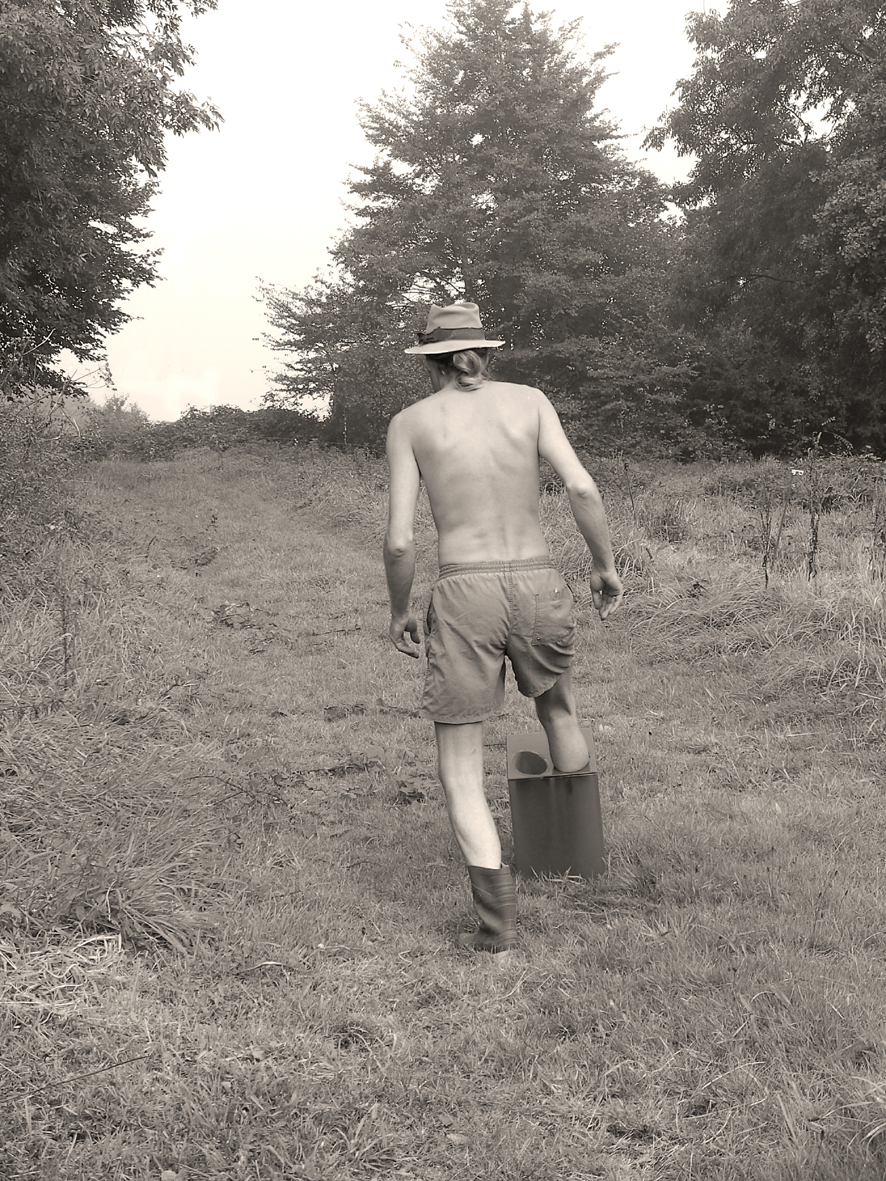
‘L Éveil de Magritte [Et In Arcadia Ego]’- 2018, digital print, plexi, aluminium, 40 x 59,5 cm.
L’Art et L’Essentiel.
Het door de kunstenaar gezochte en verlangde is in geen enkel beeld te vatten. Iedere beeld schiet per definitie tekort ten opzichte van het ‘oorspronkelijke beeld’ dat ergens diep in de geest sluimert. Toch kunnen dingen soms heel goed in een lijstje worden gevat en het blijft me verbazen hoe juist beelden, vaak bestaande uit slechts enkele componenten, datgene wat desondanks onzichtbaar blijft op de een of andere manier weten te belichamen en tot aanschijn kunnen brengen. ‘Dat wat het oog doet zien heeft zelf geen oog nodig om te kunnen schouwen’ zegt de Kena Upanishad. Het wonder van het kijken vraagt echter om onze blik, een betrokken blik wel te verstaan. Zeker, want datgene wat telkens wordt getracht aan te raken met materiaal en vorm, maar dat zelf onaanraakbaar blijft en voorbij alle vorm openbaringen ligt, zou nooit een bronzen of ‘gouden kalf’ mogen worden – een fetisj dat als ding op zich de hele waarde is uit gaan maken wanneer alles tot object wordt gereduceerd en vergeten wordt dat de kracht van iedere poëzie schuilt in datgene waar naar verwezen wordt. Dat wat ‘buiten beeld’ valt. Verhult de blinde vlek uiteindelijk niet enkel het zicht op het onnoembare mysterie dat wij zelf zijn? Kan een op hol geslagen kunstwereld zich staande houden tussen dollars, speculanten en leeg prestige?
De ziel huist in de ogen zegt men, en het is het waarnemen dat onze werkelijkheid scheppend gestalte geeft. ‘Kijken vindt plaats vanuit bewustzijn’ (J.C.J. Van der Heijden). Wellicht meer dan bij de andere zintuigen is de blik stille getuige, getuige van diens eigen daad van schepping (waar némen) waarin scheppen, degene die schept en het geschapene met elkaar versmelten. Kijken geschiedt in stilte, heeft geen woorden nodig om het onnoembare te vatten. Er is afstand, terwijl alle afstand wegvalt. Kijken blijft zonder aanraking wanneer aan het essentiële wordt geraakt.
(dec.2018)
“Celui qui se définit ne peut savoir qui il est réellement.” [Lao Tse, H 24]
Art and the Essential.
The artists ‘imaginary’ quest cannot be accomplished by whatever image. All his work remains by definition but a reflect of the ‘one and original’ image somewhere slumbering in the abyss of his mind. Nevertheless art can very well function as an ideal framework, discovering unexpected visualisations, with or without framing them. I am continuously amazed on how images, often consisting of but a few components, are somehow able to represent, or even more than that, are almost seemingly able to embody that which remains nevertheless unseen. There is a profound magic in vision. ‘That which makes the eye see, doesn’t need eyes itself in order to be able to perceive’, according to the Kena Upanishad. The miracle of sight calls for a keen eye as well as an involved perception. Most certainly, since each attempt to touch the untouchable by means of form and material remains unresolved beyond all formal and artistic revelations, it should never may become reduced to the level of a bronze or ‘golden calf’ – a fetish worshipped only for its visual qualities when everything is brought down to the limited status of being merely objects, and thus, when forgotten that the real power of poetry resides in its metaphors and not in the words themselves; i.e. in that which remains ‘out of picture’. Does the blind spot function in any other order than as a perfect ‘cover-up’ for the unnameable mystery we happen to be? Is it possible for the art world-on-derive to hold on amidst those blind forces of big money, prestigious collectors and manipulative speculates?
The soul is in one’s eyes, they say, and our own perception creates and shapes the reality all around. ‘Seeing is from within consciousness’ (J.C.J. Van der Heijden), and not a mere input on the retina, neighter output of the brain. Possibly more than with any other sense organ, the eye is a silent witness, both as a creator; witnessing its own deed of creation (perception), in which the process of creation, the one who creates and the thing created seem to melt into each other. Seeing is committed in silence. It doesn’t need any derivative verbalisation to catch the unnamable. There is both distance as well as dis-appearance of all distance. Sight itself remains pure when it comes in touch with the essential.
(dec. 2018)
 Wido Blokland